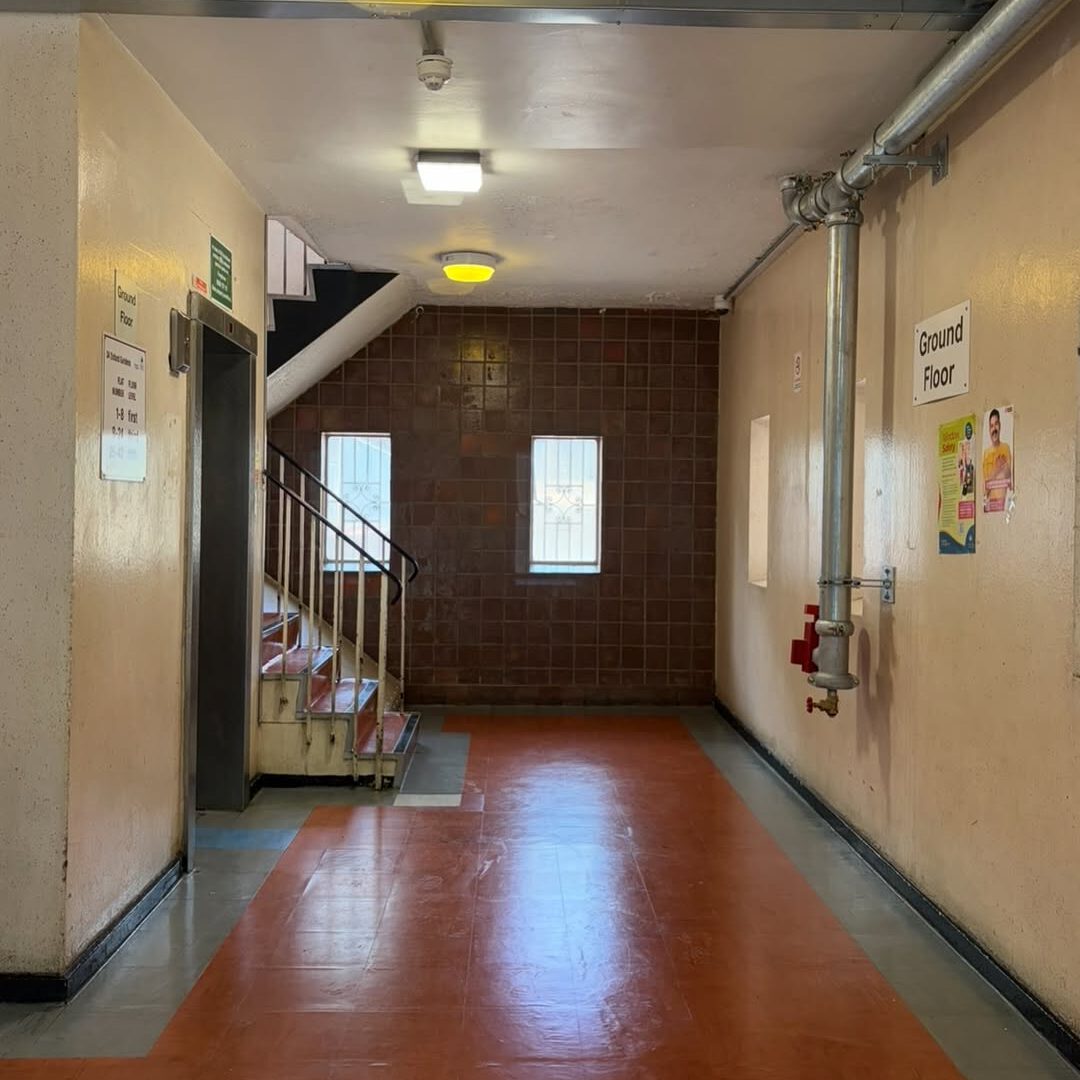
Yesterday, while wandering around Notting Hill, I came across this building a…
May 31, 2026
Yesterday, while wandering around Notting Hill, I came across this building at what appears to be 34–36 Oxford Gardens. My first thought was that it looked tired and in need of a bit of care. At the same time, there was something about it that immediately caught my attention.
The building shows many of the characteristics associated with late 1960s municipal modernism. The concrete frame is clearly expressed, filled with coloured panels and repetitive modular windows. There are access decks, recessed balconies, and an overall medium rise density that feels very different from the tower block developments of the same period. The burgundy and orange spandrel panels are especially evocative of British housing built between the mid 1960s and mid 1970s.
I tried to find out who designed it, I guess I wasn’t too lucky, so if you please know, let me know! What I did discover, however, is that the building sits within the Oxford Gardens Conservation Area, which feels slightly unexpected given that the area is primarily known for its Victorian housing stock. As a result, the block reads as a post war insertion into a much older urban fabric. Walking through the neighbourhood, you move between rows of Victorian terraces and villas before suddenly encountering this distinctly municipal modernist complex.
It is not a celebrated Brutalist landmark, nor does it seem to feature prominently in architectural histories, but perhaps that is exactly what makes it interesting. It belongs to a category of everyday welfare state architecture that is increasingly being looked at again with fresh eyes. Despite decades of alterations and wear, the original composition remains surprisingly legible. The structural grid is still visible, the coloured façade panels continue to establish a rhythm across the elevation, and the recessed balconies and elevated circulation routes still give a sense of the ideas that shaped the project.
What I found most interesting was this tension between neglect and persistence. The building may need some love, but it still carries enough of its original character to tell a story about a particular moment in London’s architectural and social history.