Both my mum and dad follow the faith of Alevism.
March 2, 2026
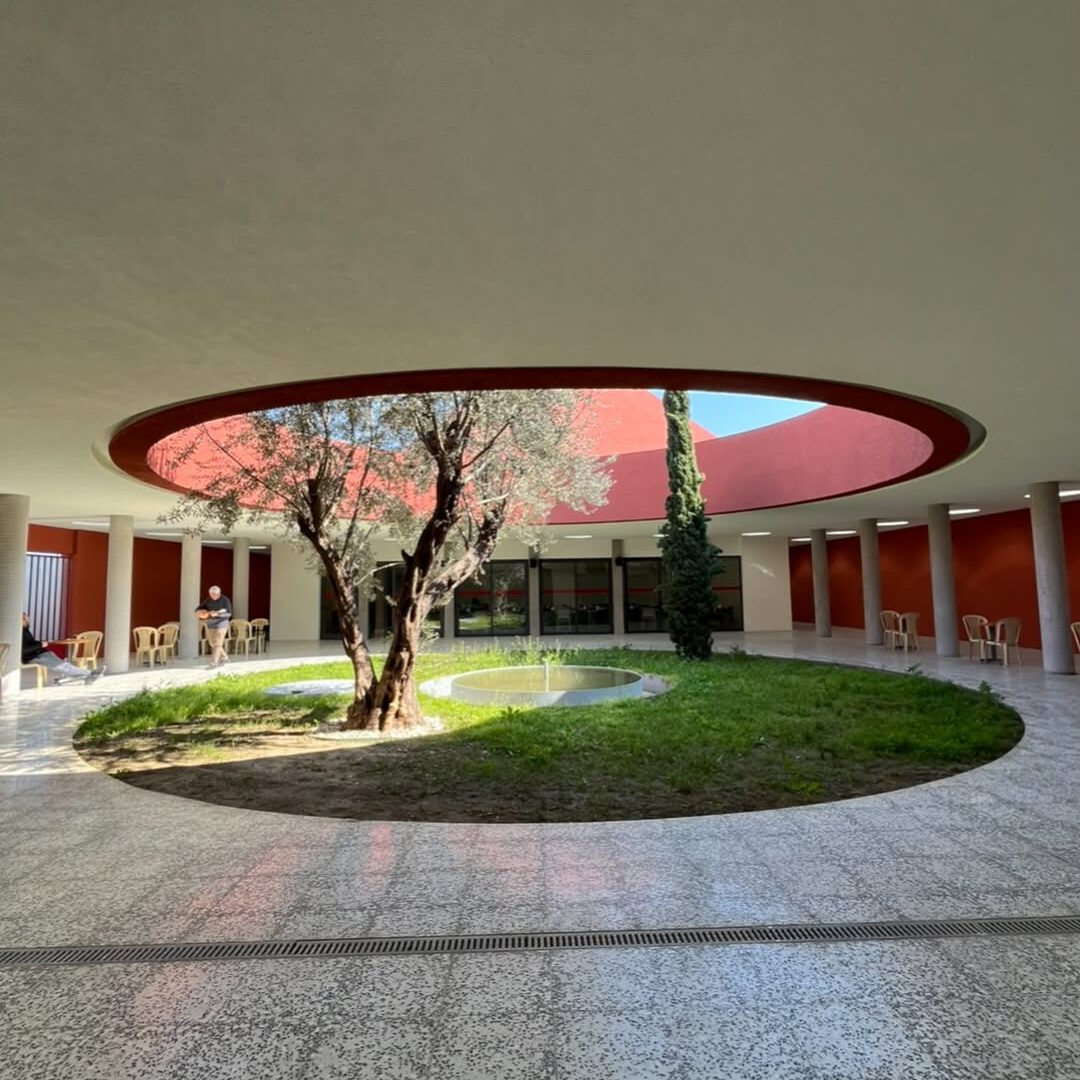
Both my mum and dad follow the faith of Alevism. Growing up, I was often taken to a cemevi in London or to ceremonies in Turkey during holidays. Even though I don’t actively practise as an adult, Alevism is still the belief system I feel closest to. During my trip to İzmir, I really wanted to visit the Balçova Cemevi, an extraordinary building designed by Nevşat Sayın @nsmh____ , one of the most important contemporary Turkish architects.
When we arrived, we were welcomed by Uncle İsmail, one of the nine committee members of the cemevi. He was incredibly warm and generous with his time, explaining the full story behind the building and how it came to exist. We also had the chance to meet the Dede, who, to put it simply, plays a role similar to a priest in a church or an imam in a mosque. Both of them were kind, open, and genuinely interested in sharing their knowledge with us.
The interior walls of the building are currently white, but we were told that the architect originally intended them to be the same earthy tone as the exterior façade. This change is planned to happen after Nevruz, a twelve day fasting period observed by Alevi people in June.
Historically, cemevis were not visible or monumental buildings. Because Alevis often had to practise their faith discreetly in Turkey, these places of worship did not present themselves as large or recognisable structures. From the outside, they appeared modest and ordinary. However, the interiors carried their own strong architectural identity. One of the most distinctive elements was the overlapping pyramid roof structure known as the tütekli tavan. Although this roof system also existed in other building types, it became strongly associated with cemevis over time.
With the migration of Alevi communities from rural areas to cities in the 1950s, a new architectural question emerged: how could a cemevi exist in an urban environment and still be recognisable without losing its spiritual privacy? This question became central to the design of the Balçova Cemevi.
Continues in comments +