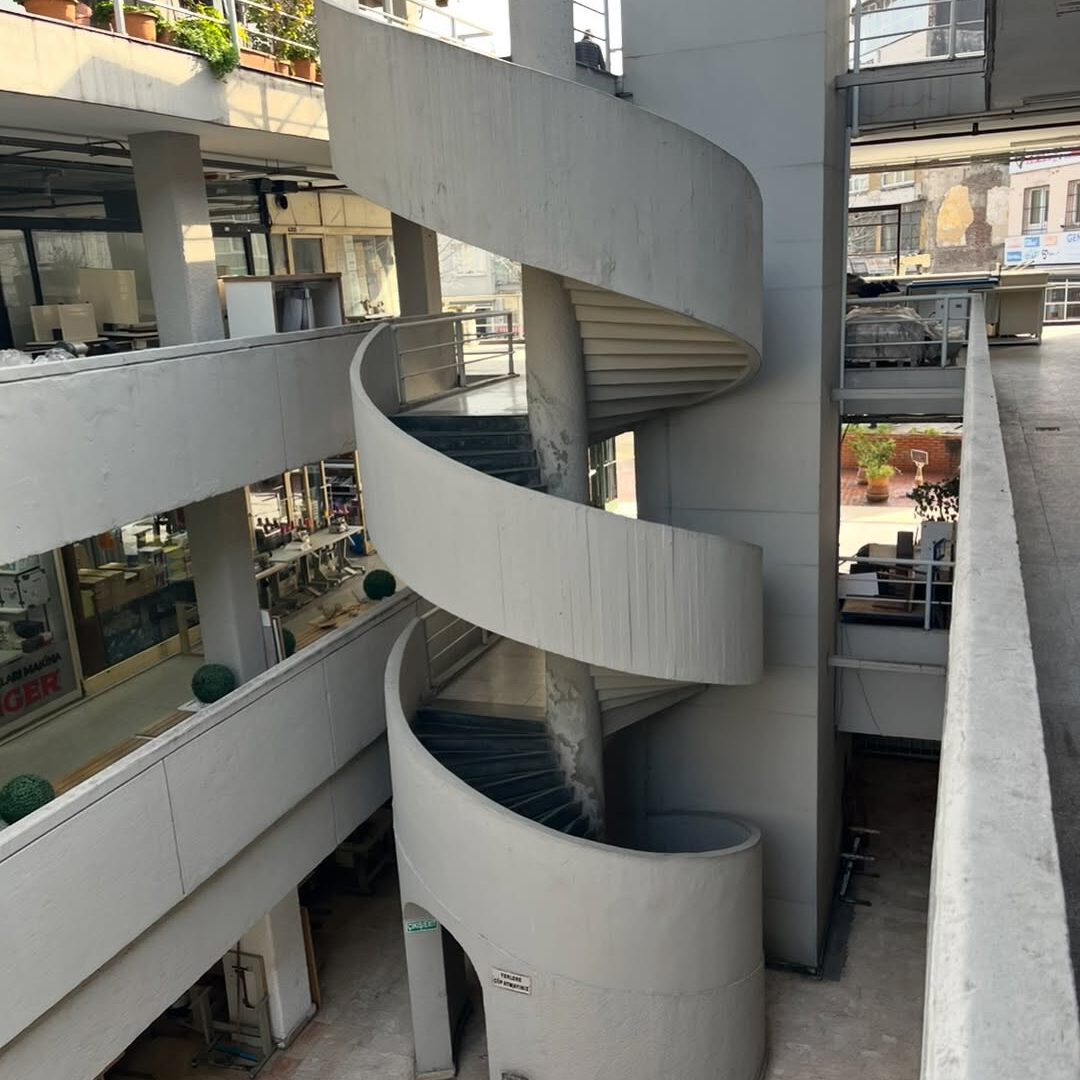
The IMÇ is one of my favourite modernist buildings in Istanbul.
March 15, 2026
The IMÇ is one of my favourite modernist buildings in Istanbul. The complex consists of six blocks. At first they appear similar yet each one reveals a slightly different spatial character as you move through them.
My first visit happened close to 6pm during Ramadan. Many of the shop owners were preparing to close so they could break their fast. The building was slowly emptying and the atmosphere felt unusually quiet for a place built around trade and exchange, so I decided to return the next morning at sunrise to experience it more lively.
Entering İMÇ feels like stepping into a labyrinth. Circulation moves in multiple directions and orientation becomes uncertain very quickly. A plan drawing almost feels necessary if you want to understand the building fully, well at least for mee! Each block hosts a different concentration of trade. Block 5 is largely dedicated to music with shops selling instruments, records, and audio equipment. Blocks 1 and 2 instead focus on interior materials such as curtains, flooring, paint, and other domestic finishes.
Designed by Doğan Tekeli and Sami Sisa in the late 1950s, the project belongs to the first wave of urban modernisation in Istanbul. The architecture merges experimental modernist thinking with references to the spatial logic of the traditional bazaar. One of its most compelling qualities is the way the complex negotiates its surroundings, forming a porous connection between the historic city and the emerging modern centre.
What makes İMÇ particularly fascinating is how it has evolved over time. Originally planned as a textile merchants market with hundreds of shops, the complex gradually reorganised itself into specialised zones. Textile wholesalers, music sellers, sewing machine repair shops, and interior suppliers now occupy different parts of the building. The carefully planned spatial order has been continuously altered by its users as shops expand into corridors, signage accumulates, and storage areas appear where circulation once dominated.
Continues in comments +